
 See Our Latest Article on HelloNation
Knee pain can come from many sources, including overuse, arthritis, a minor strain, a change in activity, or an injury. In many cases, symptoms can improve without medication by combining temporary activity changes, gentle movement, strengthening, and attention to daily habits.
The right approach depends on the cause and severity of the pain. A swollen knee after a fall requires different care than gradual stiffness that appears after sitting or walking.
What can help knee pain at home?
For mild knee pain without a serious injury, the first steps are usually to reduce aggravating activities while continuing comfortable movement.
Avoid activities that sharply increase pain, such as repeated squatting, kneeling, running, jumping, or climbing many stairs. This does not mean keeping the knee completely still. Prolonged rest can increase stiffness and weaken the muscles that support the joint.
During the first day or two after a minor strain, consider:
- Resting from painful activities while continuing easy movement
- Applying a cold pack wrapped in a towel for up to 15–20 minutes
- Elevating the leg if swelling is present
- Using a handrail on stairs
- Taking shorter walks rather than remaining inactive
Cold is often more comfortable for swelling after activity or injury. Gentle warmth may feel better for stiffness, especially before movement. Neither heat nor cold should be placed directly on the skin.
Should you keep walking with knee pain?
Usually, gentle walking is helpful if it does not cause sharp pain, significant limping, or increasing swelling. The goal is to maintain mobility without repeatedly irritating the joint.
A practical approach is to start with five to ten minutes on a level surface. If symptoms remain stable during the walk and settle afterward, increase the duration gradually. If walking causes pain that lasts for hours, worsens at night, or changes the way you walk, reduce the duration or switch temporarily to a lower-impact activity.
Residents may notice more knee discomfort during icy winter conditions, when walking surfaces become uneven and people take shorter, more guarded steps. Supportive footwear, clear walkways, adequate lighting, and using railings can reduce unnecessary strain and fall risk around the home.
Which exercises strengthen the knee?
Strengthening the muscles around the knee can reduce the amount of stress placed on the joint. The quadriceps, hamstrings, hips, and buttock muscles all contribute to knee control.
Common starting exercises include:
- Thigh tightening: Sit or lie with the leg straight, tighten the front thigh muscle, hold for five seconds, and relax.
- Straight-leg raises: While lying down, tighten the thigh and slowly lift the straight leg a few inches.
- Supported sit-to-stands: Rise from a sturdy chair and sit back down slowly, using the arms only as needed.
- Calf raises: Hold a counter and slowly rise onto the balls of the feet, then lower with control.
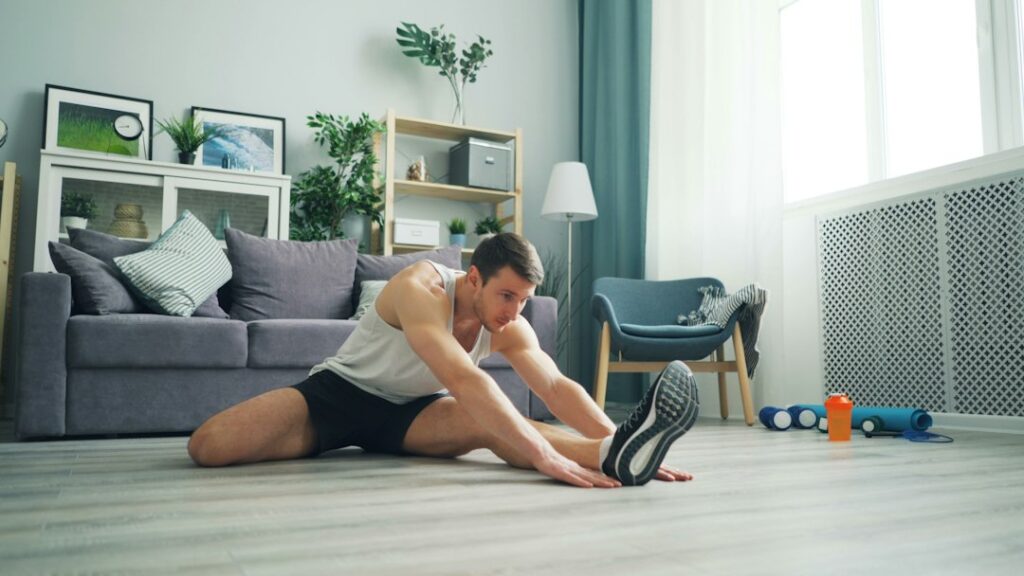
- Gentle hamstring stretches: Stretch only to a mild pull, not pain.
Begin with a small number of repetitions and perform movements slowly. Exercise should not produce sharp, stabbing, or escalating pain. Mild muscle fatigue can be expected, but the knee should not become increasingly swollen or painful afterward.
A brief warm-up, such as easy walking around the house, can make strengthening more comfortable. People recovering from surgery, a major injury, or a condition affecting balance should receive individualized exercise guidance before beginning a new routine.
Are low-impact activities better for sore knees?
Low-impact exercise can provide cardiovascular benefits while placing less stress on the knee than running or jumping. Options may include cycling, water exercise, swimming, controlled walking, tai chi, or light gardening.
Short sessions are acceptable. Five or ten minutes spread throughout the day can be a reasonable starting point for someone who has been inactive. As tolerance improves, activity can be increased gradually rather than making a sudden change.
A useful pacing rule is to change only one factor at a time: distance, speed, frequency, or terrain. For example, add five minutes to a walk before adding hills or increasing speed.
Can body weight affect knee discomfort?
Body weight is only one factor in knee pain, but carrying extra weight can increase the load placed on the knees during walking, stairs, and rising from a chair. Even modest weight loss may reduce pressure and improve movement for people with arthritis.

Weight-related changes should be gradual and should not depend on painful exercise. A balanced eating pattern, adequate protein, regular sleep, and low-impact activity can support long-term progress. The goal is not a rapid diet but a sustainable reduction in strain on the joints.
What daily habits may reduce knee irritation?
Small changes can make painful movements less frequent.
Consider:
- Using a raised chair instead of a low seat that requires deep bending
- Alternating sitting and standing rather than staying in one position for long periods
- Avoiding prolonged kneeling when cleaning, gardening, or doing household repairs
- Keeping frequently used items within easy reach
- Wearing comfortable, stable shoes
- Taking breaks during yardwork or seasonal outdoor chores
- Using a pillow between the knees when side-sleeping if that position feels more comfortable
Chiropractic education may include discussion of movement patterns, joint mechanics, posture, and ways to modify activities. However, knee pain can also involve ligaments, cartilage, muscles, nerves, inflammatory conditions, or referred pain from the hip or lower back. No single approach is appropriate for every cause.
When should knee pain be evaluated?
Seek prompt medical evaluation after a significant fall, twisting injury, or impact if the knee is badly swollen, visibly deformed, unstable, or difficult to bear weight on. Evaluation is also warranted if the knee locks and cannot fully straighten.
Urgent care is appropriate when the knee is hot, red, very swollen, and painful, particularly when accompanied by fever or feeling unwell. These symptoms can signal infection or another condition that should not be managed with home exercises alone.
Arrange an evaluation if pain persists for several weeks, repeatedly causes limping, interferes with sleep, or steadily worsens despite reducing aggravating activities. Numbness, tingling, unusual weakness, or pain extending down the leg also deserves attention.
A scan is not automatically needed for every episode of knee pain. The decision depends on the history, examination, injury pattern, and whether symptoms suggest a fracture, major tissue injury, infection, or another serious problem.
How can progress be tracked?
Keep a simple record for one or two weeks. Note the activity that triggers symptoms, the level of pain, swelling, walking tolerance, and how long discomfort lasts afterward. This can reveal whether the knee is improving or whether a specific activity is repeatedly causing setbacks.
The most reliable non-medication plan is usually gradual: calm an irritated knee, restore comfortable motion, strengthen the supporting muscles, and return to more demanding activities in small steps. If the pattern does not improve or the symptoms seem unusual, the cause should be assessed rather than repeatedly pushing through the pain.
